Story Time Video | Ages 4 and Up

Space Telescopes

Learn about space telescopes and the scientists who use them to learn about our universe! 

We want to hear from you!

Craft | Ages 5 and Up (With Help from a Grown Up)

Create a Space Viewer

Make a viewer to help you focus on the night sky. 

What You'll Need:

  • Cardboard tube
  • Black construction paper
  • Scissors
  • Tape
  • Decorating materials

We want to hear from you!

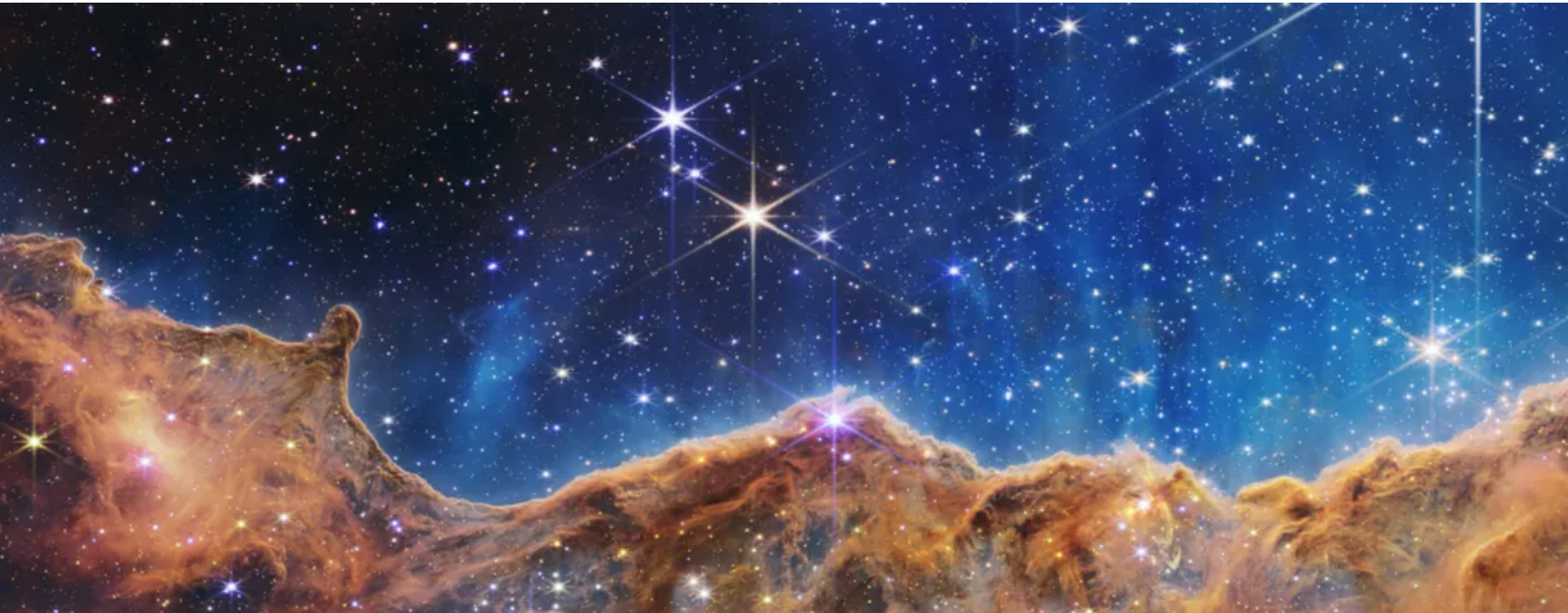
The background of this photograph is an expansive view of the universe, with swirling vapor like shapes and glowing stars. A large white outline near the edges of the image frames the view of the Nancy Grace Roman telescope, while a small box in the center frames the view of the Hubble Space Telescope.

Activity | Ages 8 and Up

What Can Space Telescopes See?

Make a model of what two famous telescopes can see.

What You'll Need: 

  • Paper
  • Printer (Optional) or Ruler and Scissors

1. If you have a printer, print the field of view templates and cut the grey area out of the middle of the paper.       Print Templates

If you do not have a printer, cut a 1" square out of the center of the piece of paper. Cut a 7" by 4" rectangle out of another piece of paper.

2. Select an image of the universe to look at.

3. Hold the piece of paper with the smaller hole up to the screen. What do you notice?
This represents what the Hubble Space Telescope can see.

4. Hold up the piece of paper with the larger hole up to the screen. What do you notice?
This represents what the Nancy Grace Roman Telescope will see.

5. Compare what you can see with the two viewers. 

  • How does using each viewer change what you see?
  • How many of the small viewers would it take to cover the whole image? How many larger viewers?
  • Which viewer helps you focus on a single detail? How could that help a scientist?
  • Which viewer helps you see many details together? How could that help a scientist?
  • Which would you use to explore the universe? Which would you use to look carefully at a star? Why?

6. Bonus! Repeat the activity looking at a different picture of the universe or take both viewers outside to look a the night sky. What do you notice?

This activity was designed with help from the Space Telescope Scientific Institute.  

We want to hear from you!

Spacecraft Hubble: Hubble Floating Free (2002)

Air and Space Connection

Different telescopes see different things. These views are inspired by real telescopes. 

  • The Hubble Space Telescope has a narrow field of view: it sees a small part of the sky in great detail.
  • The Nancy Grace Roman Telescope will have a wide field of view:  it will see a big part of the sky all at once.
  • Scientists will use the Nancy Grace Roman telescope to find interesting things for the Hubble Space Telescope to look at in more detail.

Meet Scientists

A middle aged woman with long dark hair, wearing a teal blazer, addresses a crowd while speaking into a microphone. Behind her is the NASA logo and a screen showing a visualization of the cosmos.

Elisa Quintana

  • Elisa works at NASA and uses telescopes to find planets outside our solar system.
  • When she was younger, she didn't think she was good at math and did not want to be a scientist. But later, she took a math class and realized she liked it!

For Kids: Activities About Planets Outside Our Solar System

Nancy Grace Roman

Nancy Grace Roman

  • Nancy used telescopes to learn how stars move and what they're made of.
  • When Nancy was a student, her school counselor said girls shouldn't take math. She didn't listen and studied math anyway.
  • Nancy helped build the first large telescope sent into outer space, the Hubble Space Telescope. People call her the "Mother of Hubble."
  • A new telescope is going to be named after her.

For Grown Ups: More About Nancy Grace Roman

We want to hear from you!

Image of space packed with a cluster of galaxies along with a few foreground stars.
Enjoy This?

Find Out More About Activities Like These

Soar Together at Air and Space is made possible by the generous support of the Northrop Grumman Foundation.