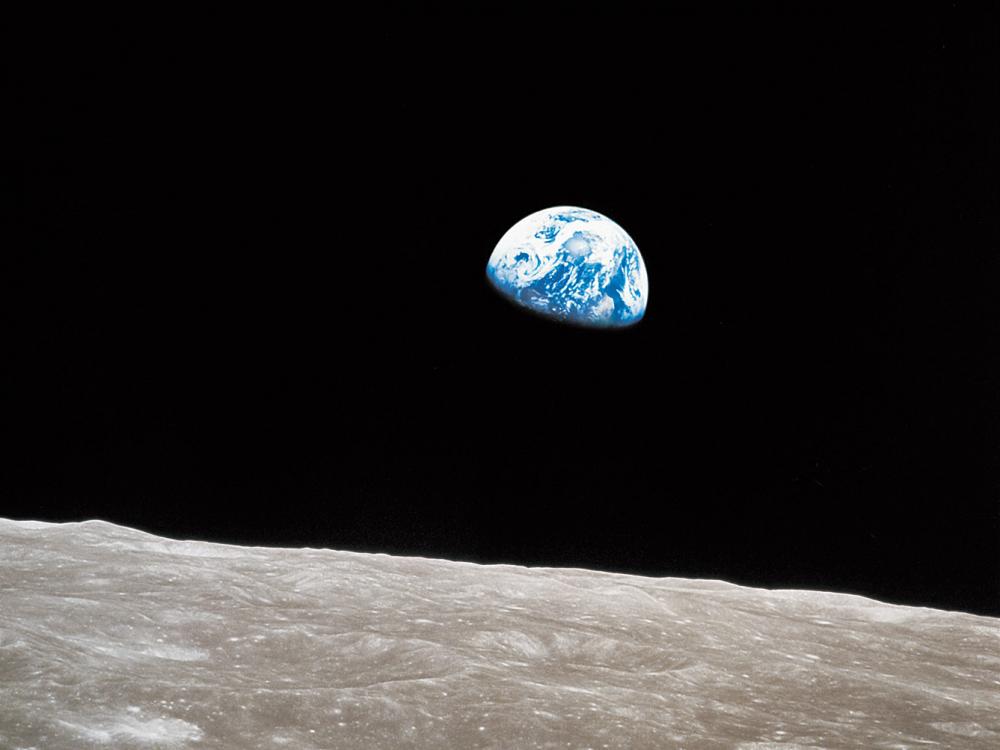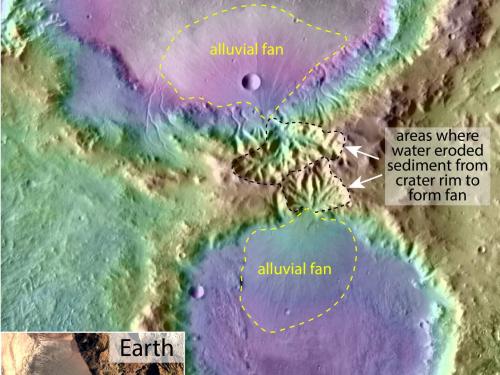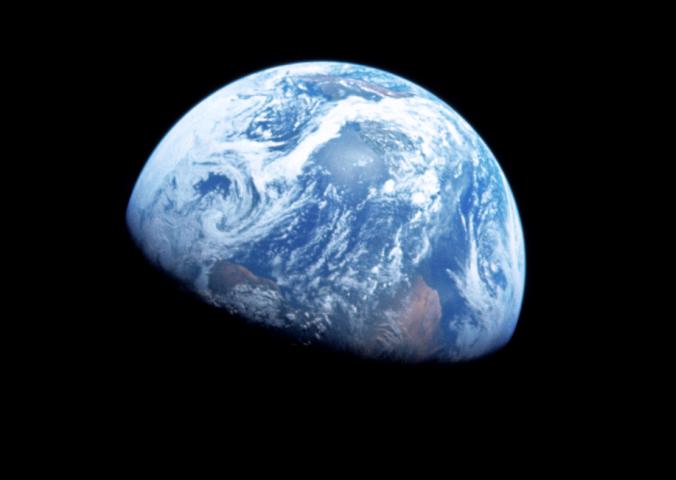
Aerospace innovations contribute to understanding, monitoring, and mitigating climate change.
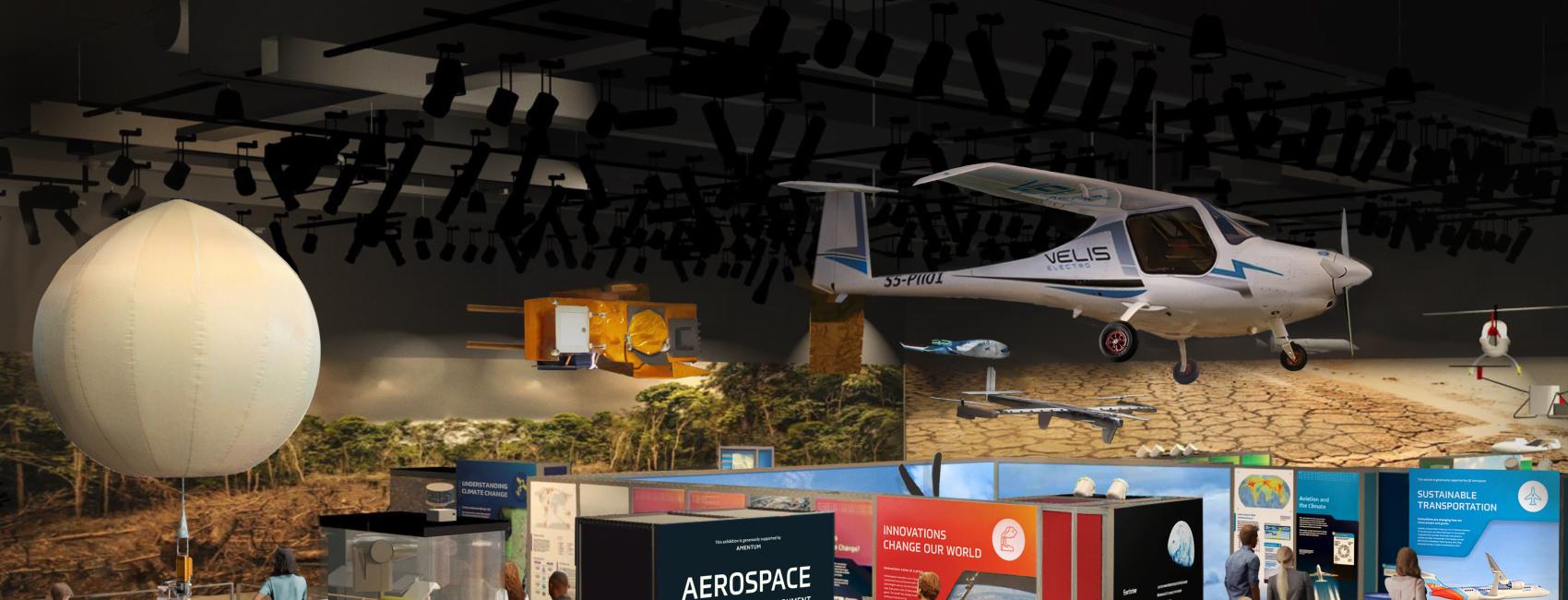
The new Aerospace and Our Changing Environment exhibition focuses on how aerospace innovations help us understand climate change while providing new technologies to respond to the challenge. Aerospace and Our Changing Environment aims to explore both the science of climate change and the efforts of individual and collective actions within aerospace industries to mitigate it. This exhibition covers:
The exhibition will be presented in the Allan and Shelley Holt Innovations Gallery. This dynamic space will feature exhibitions that rotate every 18-24 months and explore the different ways aerospace innovations are a central feature of contemporary life and are transforming our future.
Learn about all the ways we're transforming the Museum.
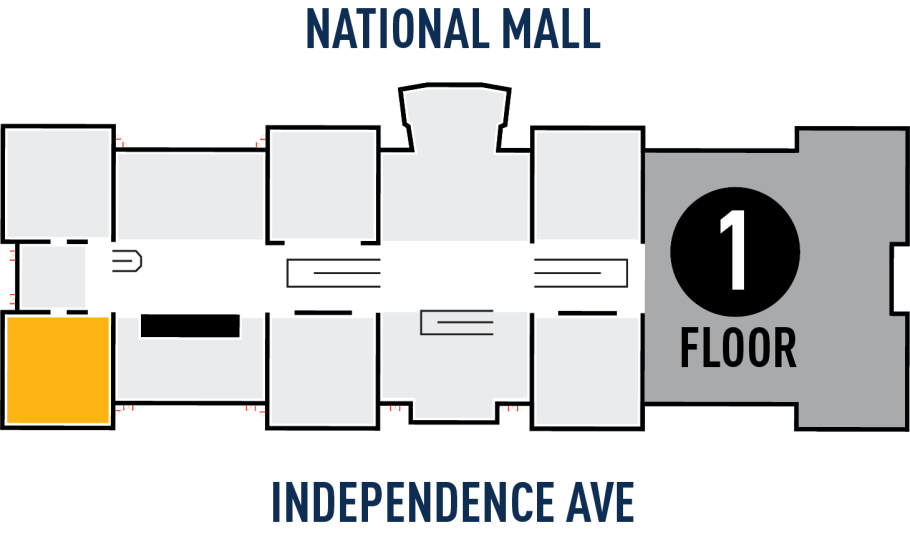
Aerospace and Our Changing Environment covers three main areas: earth observation, energy & agriculture, and transforming transportation.
Weather refers to the environmental conditions at any given moment. Climate describes weather patterns over decades or centuries. Climate change refers to long-term shifts in temperature and weather patterns.
Since its formation, Earth’s climate has been changing. Those shifts can be natural, like changes in the Sun’s activity or large volcanic eruptions. But since the 1800's, human activities that rely on fossil fuels have caused changes to our climate.
Aerospace innovations help us study the climate.
Satellites, airplanes, and drones help us observe and gather data about our planet. Scientists analyze this information to better understand Earth’s climate. These findings show us what the climate was like in the past, how it’s changing now, and what the future might hold.
NASA launched TIROS-Next Generation (TIROS-N) in 1978. It was the first satellite to measure the temperature of Earth’s atmosphere. Data from it and later satellites show that temperatures have risen over time.
Geostationary Operational Environmental Satellites (GOES) carry sounders like this one. They read temperature and pressure in the atmosphere and on Earth’s surface. This type of sounder flew onboard GOES N, O, and P.
This is an Enhanced Thematic Mapper Plus (ETM+) flight spare. A similar instrument flew on Landsat 7 between 1999 and 2017. The instrument collected high-resolution images of land, water, ice, and plant cover.
Innovations are generating greener electricity and changing how we grow our food.
Today, innovators are working to lower the emissions caused by how we produce energy and food. They’re using lessons learned from aerospace to find better ways to capture and use solar and wind energy, grow more food on less land, and reduce the use of greenhouse gas-emitting resources, such as fertilizers and pesticides.
In 1960, NASA used this panel to test the concept for the solar cells that later powered the Mariner spacecraft. Compared with other space-based power sources, solar panels are lightweight. They can also produce power for years. The solar cells on this Mariner test panel still work after 60 years.
Swiss company TwingTec harnesses wind power at higher altitudes with stronger winds. Its Twings (short for tethered wings) generate power in flight. This Twing prototype tested flight systems.
Built in the 1990s, the RMax was one of the first agricultural drones. It can fly low to get close to crops for spraying, allowing farmers to reduce the amount of pesticides they apply. Drones can also access areas where tractors can’t go. This can result in more efficient land use.
Innovations are changing how we transport people and goods.
Globally, transportation makes up 15 percent of climate emissions, with a portion of that from aviation. We can reduce our climate impact by finding more efficient ways to move people and goods. Innovations in aviation can help.
The Velis is the first electric plane to be certified for normal operation. Its batteries provide up to one hour of flight time. That makes it suited for training and short sightseeing flights. In the nose of the Electro sits an electric motor, powered by two battery packs. The electric motor provides clean, quiet power.
This open fan engine design can make flight more efficient. It can cut fuel use by 20 percent. It’s being developed as part of a joint venture between GE Aerospace and Safran. In the future, more efficient open fan turbines like the CFM could replace existing engines on a range of aircraft.
Blended Wing Body aircraft are one of the most promising pathways to more efficient flight. They are also well adapted to alternate fuel sources, like liquid hydrogen.
The Museum gratefully acknowledges those who have generously supported this gallery.
The Aerospace and Our Changing Environment exhibition is generously supported by:
Amentum
GE Aerospace
Linde
Founding support for the Allan and Shelley Holt Innovations Gallery is generously provided by:
The Hillside Foundation – Allan and Shelley Holt
Museum Transformation
A major renovation is underway as we reimagine our galleries and presentation spaces in our iconic National Mall building in Washington, DC. Join us as we inspire a new generation of pioneers and explorers.