
World War I: The Birth of Military Aviation
World War I made the airplane—a recent invention—essential in war and peace. The conflict, which raged from 1914 to 1918, laid the foundation for military aviation. It was a decisive test for emerging aviation technology and tactics and helped establish the aviation industry.
The new World War I: The Birth of Military Aviation exhibition uses fascinating artifacts and the distinctive sights and sounds of early combat aircraft to tell the story of how remarkable people adapted the new technology of the airplane to warfare and changed how the world fights and flies.
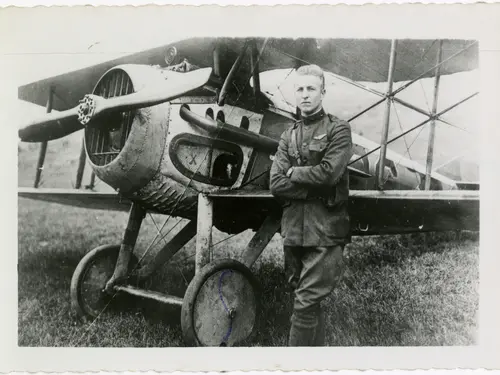
Some of the war’s best-known aircraft – the beloved Sopwith Camel, deadly Fokker D.VII, and the Dayton-Wright DH-4 (the first American-built combat airplane to see action) – frame displays of breakthrough technologies. One of the only surviving aircraft flown by a wartime ace, the SPAD XIII Smith IV, helps inform the story of the day-to-day heroism and heartbreak of American aviator Arthur Raymond Brooks. A large immersive projection space allows visitors to see and hear the amazing sights and sounds of open-cockpit aerial combat in high definition.
Learn about all the ways we're transforming the Museum.

Teaser Trailer & Gallery Preview Article
What's Inside?
"The new gallery is the third iteration of a World War I exhibition since the National Air and Space Museum opened its building on the National Mall in 1976. The previous iteration opened in 1991. Since then, improvements in exhibition design, multimedia displays, and interactives have provided new opportunities for the Museum to showcase this critical, but all too frequently overlooked moment in our aviation heritage."
More About World War I
 Deep dive
 Deep dive
In this Exhibition



The Museum gratefully acknowledges those who have generously supported this gallery.
World War I: The Birth of Military Aviation is made possible by the generous support of:
Aramont Charitable Foundation
Kettering Family Philanthropies
Mark Dunkerley and Marilia Duffles

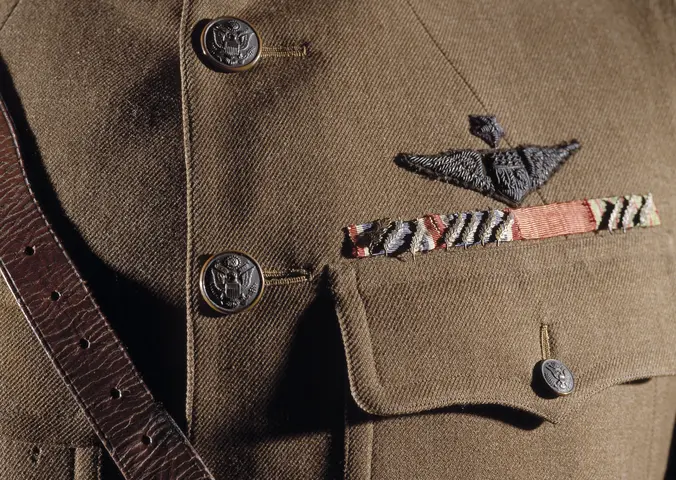
World War I mechanic Wilber E. Goodhart's service uniform next to a Le Rhȏne Model J rotary engine.

A range of aircraft, including the Fokker D. VII and the Sopwith F.1 Camel, on display.

Museum Transformation
Be the Spark
A major renovation is underway as we reimagine our galleries and presentation spaces in our iconic National Mall building in Washington, DC. Join us as we inspire a new generation of pioneers and explorers.
You may also like
 Exhibition
 Exhibition
 Story
Story
 Deep dive