

Reserve a Program for Your Field Trip
Free
These are offered free of charge.
For Groups of 10 or More
These programs are intended for school groups, homeschool groups, and community-based organizations serving youth.
You will need to reserve the programs in our reservation software. We recommend you follow along in our tips page to answer any questions.
Available Programs
Available at Both Locations: Science Demonstrations Story Time
Exclusive to the National Air and Space Museum in Washington, DC: Planetarium Shows
Exclusive to the Steven F. Udvar-Hazy Center: Guided Tours STEAM Labs

Science Demonstrations
Science demonstrations are interactive shows that bring the STEM concepts found in our galleries to life. These shows use live experiments, hands-on activities, and authentic museum artifacts to break down complex concepts.
Location: Both Locations
For Grades: 3-12
Group Size: 10-30 people
Duration: 25-30 minutes
The Explainers Program is made possible by the generous support of RTX.
Science Demonstration Options:

Forces of Flight
Discover how things fly and experiments that illustrate the forces of flight. Learn what a force is, explore Bernoulli's principle, and investigate different forms of propulsion.
Recommended for Grades: 3-8

Paper Airplane Contest
Learn about stability and a plane's center of lift and gravity to determine the best design of a stable aircraft. Create your own airplanes and compete to see whose plane can fly in a stable flight path.
Recommended for Grades: 3-8

Living and Working in Space
What do astronauts wear on spacewalks? How is day-to-day life different in the hazardous environment of space? Discover real world artifacts from life aboard the International Space Station, watch experiments that demonstrate how space affects the human body, and discuss the innovations that allow humans to adapt to life outside of Earth's atmosphere.
Recommended for Grades: 3-12.
Science Demonstrations are available in other formats in addition to a field trip experience.

Story Time
Take to the skies or travel to far away planets with stories read aloud by museum educators for the youngest visitors. Each story time includes a story read-aloud, a chat about an image or other museum resources, and a craft activity demonstration.
Location: Both Locations
Group Size: Groups of 10 to 30
Duration: 30 minutes
Note: Story Times also come with additional resources in a Learning Lab and an online story time that expands the theme for teachers to use before or after the program.
Story Time programming is made possible by the generous support of the Conrad N. Hilton Foundation.
Story Time Options:

The Great Solar System Tour
Learn more about the planets with this exploration of our Solar System. Reserve a Museum educator to read Space Walk by Salina Yoon, chat about spacecraft that have travelled to the edge of the Solar System and lead students in the creation of a solar system book.

Rocket Race
Read Hare and Tortoise Race to the Moon by Oliver J Corwin, examine rockets in our collection and notice what shapes they are made from, and lead students in the creation of three dimensional models of rockets.

Air Show
What is it like to experience the thrill of an air show? Read Air Show by Treat Williams, demonstrate loops, rolls and other aerobatic maneuvers, and lead students in the creation of their own tricky flyers.

Inspirational Biography Series
Read an inspiring biography of a history maker in aviation or space exploration. Choose from: Amelia Earhart, Bessie Coleman, Mae Jemison, or the Wright Brothers.
Story Times are available in other formats in addition to a field trip experience.
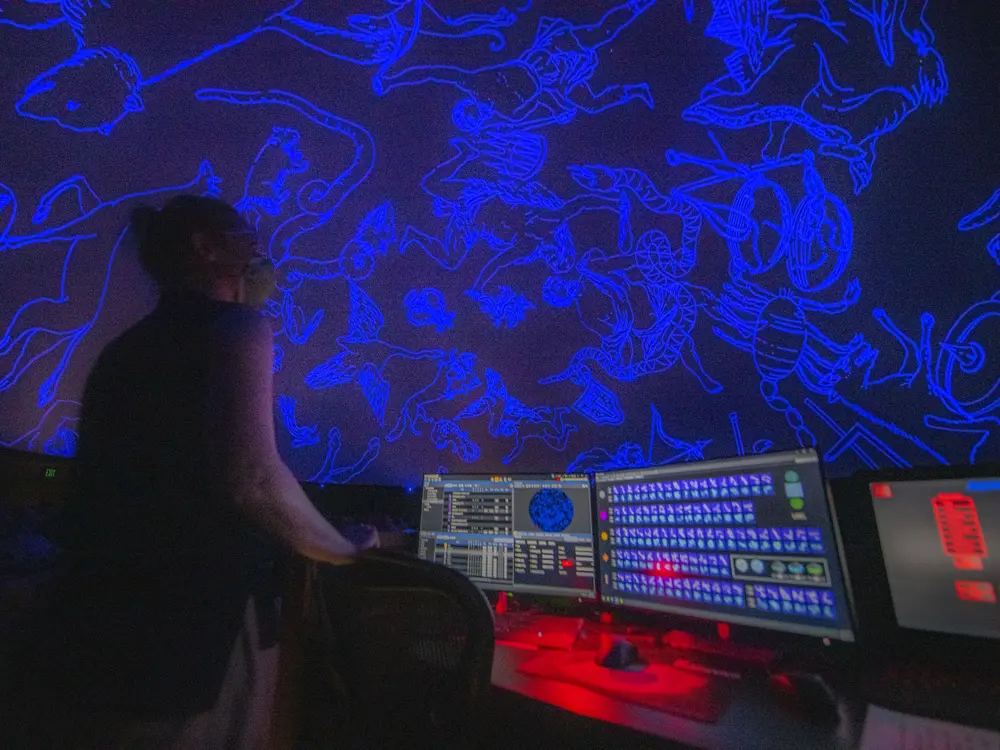
Planetarium Shows
Journey through the night sky, led by an Museum educator. Explore stars, constellations, planets, and the Moon at our world-class planetarium.
Location: National Air and Space Museum in Washington, DC
For Grades: 3-8
Group Size: Up to 280 people
Duration: 30 minutes
Planetarium shows are available in other formats in addition to a field trip experience.

Guided Youth Tours
Explore the Museum with an expert volunteer, learning about themes in aviation and space history by looking closely at artifacts.
Location: Steven F. Udvar-Hazy Center in Chantilly, VA
For Grades: 1-12
Group Size: Groups of 10 to 30
Duration: 45 to 60 minutes
Note: Groups will be divided into smaller groups of 6 to 8 students per volunteer.

STEAM Labs
Through close looking at museum artifacts and hands-on experiments, museum educators will lead your students through this inquiry-based program.
Location: Steven F. Udvar-Hazy Center in Chantilly, VA
For Grades: K-12
Group Size: Groups of 10 to 30, unless otherwise noted
Duration: 60 minutes
STEAM Labs are made possible by the generous support of Barron Hilton.
STEAM Lab Options:

Discovery and Exploration
Follow the journey of early space flight and meet some friends along the way, from Neil Armstrong to Mars rovers. Students will choose a destination and map their own journey by coding robots to discover and travel across the solar system.
Recommended for Grades: K-2

We Can Fly!
Students will “become a pilot” of their own private aircraft as they learn about the four forces of flight, the basic parts of an airplane, and how they allow for controlled flight.
Recommended for Grades: K-2

Planetarium Discovery
Explore the night sky in a 360° portable planetarium and an accompanying activity! Elementary students will make their own constellation viewer. Middle schoolers will try a space-based radio activity.
Primary: Recommended for Grades 2-5
Secondary: Recommended for Grades 6-8
Group Size: 30 students per group
We are only able to offer two sessions per day.

To the Moon and Beyond
Through vivid images and hands-on activities, students will explore the phases of the Moon, its relationship to Earth, and the story of the Apollo missions. Students will work as mission design teams to create a habitat that could support human life on the Moon.
Recommended for Grades: 3-6

Paper Airplane Design
How do airplanes fly? Using paper airplanes and scientific methods, students will explore the relationship between an airplane's center of gravity and flight stability. They will make and test their paper airplanes, collect and graph their findings, and reach conclusions on how to improve their designs.
Recommended for Grades: 3-8

Wind Tunnel Design Challenge
Explore the limitless possibilities of aerodynamic design and forces of flight. Create, test, and refine designs using a high-powered wind tunnel.
Recommended for Grades: 5-12
Note: Are you teaching a unit on derby cars, physics, or 3D printing? Ask us about modifying this STEAM lab to incorporate wind tunnel test trials.

Living and Working in Space
While living in space might appear to be nothing but fun, some of the known and unknown effects of space can spoil the party. Create a pressure suit for an “astronaut” to ensure they have a safe journey to “space” in the vacuum pump.
Recommended for Grades: 6-12

On Glide Slope
Learn how flight instruments, controls, and procedures are used to land a plane at Dulles Airport using FAA-certified Aviation Training Devices. Through this simulator experience students will apply math to real world aviation work.
Recommended for Grades: 6-12
Group Size: 15 students per group
We are only able to offer two sessions per day to due availability of flight simulators.
Frequently Asked Questions
You can request a program in our reservation software.
We recommend you follow along in our tips page to answer any questions.
When do I need to reserve these programs?
Programs should be reserved at least three weeks in advance of visiting the Museum.
Do I need to reserve a program to bring a field trip to the Museum?
No, these reservable field trip programs are additional experiences that can enhance a field trip. They are not required.
If I reserve a program, do I still need to reserve free timed-entry passes?
No.
If you're visiting the Steven F. Udvar-Hazy Center in Chantilly, VA, we do not require passes for this location.
If you're visiting the National Air and Space Museum in Washington, DC, passes will be reserved for your group when your program request is confirmed. The passes will be sent to you separately via an email from eTix to the email you provide in your group reservation. If you've decided not to reserve a program, you will need to reserve your own timed-entry passes for your group.
If you need to cancel a reservation, please do so as soon as possible by emailing us.
If reserved groups do not alert Museum staff to a cancellation at least 24 hours in advance, your group may not be allowed to reserve future programs.
Please contact the Tours and Reservations Office by email.
Additional On Site Experiences
In addition to the free reservable programs above, you can enhance your visit to either location by taking advantage of these. There may be a cost associated with these additional experiences.

Strap into the cockpit of some of the most advanced aircraft, or take a walk through space with our IMAX shows.
Location: Both Locations
How to Reserve: Group tickets can be purchased online or via email.

Explore the cosmos without leaving the Museum in our unique planetarium shows.
Location: National Air and Space Museum in Washington, DC
How to Reserve: Tickets cannot be purchased in advanced. They must be purchased on site at the box office.
Planetarium shows are available in other formats.

Fly with the Wright brothers and the Tuskegee airmen, pilot military aircraft, or go on a spacewalk—all without leaving the Museum.
Location: Steven F. Udvar-Hazy Center in Chantilly, VA
How to Reserve: Tickets cannot be purchased in advanced. They must be purchased on site at Simulators or Airbus IMAX Theater box office.